
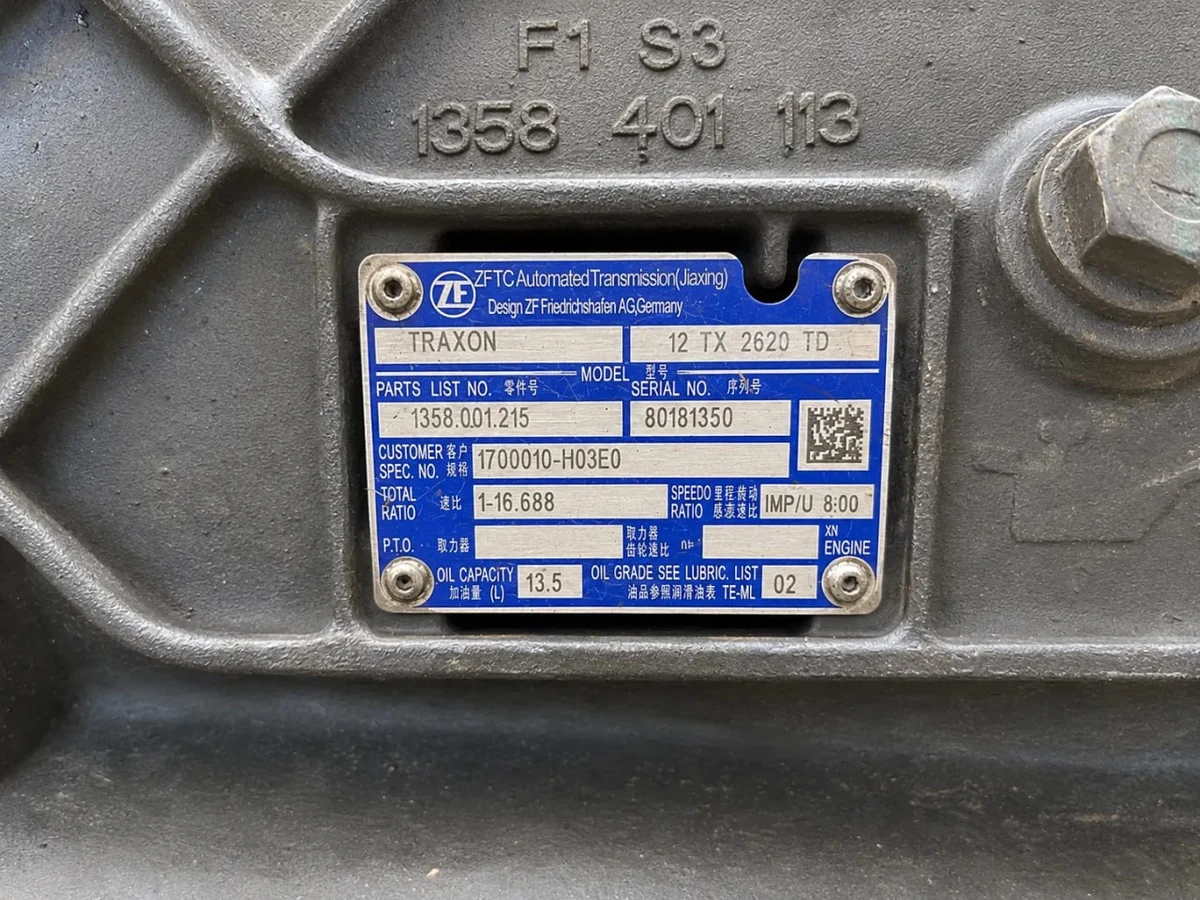
Short answer: an OEM reference and a supplier cross-reference are different documents. One identifies the manufacturer’s line; the other maps a supplier’s range to it. Treating the second as proof of the first is how a wrong variant enters an order.
Two different documents
The OEM reference comes from the manufacturer’s catalogue or the part itself. A supplier cross-reference is a mapping created by a supplier, distributor or aftermarket catalogue. It can be useful, but it is not an OEM approval.
What an OEM reference proves
It identifies a catalogue line and, with the suffix, a variant. It does not prove that a superseded number is interchangeable, that the part is in stock or that it fits a particular transmission build. Those are separate checks.
What a supplier cross-reference proves
It proves that a supplier believes its item corresponds to the OEM line. The quality of that belief depends on the supplier’s evidence, the variant and the application. Ask what the mapping is based on before you use it.
Four checks before using a cross-reference
A cross-reference is a lead, not a conclusion. Run these checks before it becomes a purchase order.
| Check | Question to ask |
|---|---|
| Reference | Does the supplier list the full base number and suffix? |
| Variant | Does the mapping distinguish coating, tooth count or kit contents? |
| Evidence | What catalogue, drawing or sample supports the mapping? |
| Application | Is the claim a fitment claim or only an identification claim? |
Document the mapping
Keep the OEM reference, the supplier reference, the variant and the evidence in one line. If the mapping changes, the record shows what was compared. This is the same discipline described in How to identify heavy-duty truck transmission parts from an OEM reference.
RFQ wording that avoids confusion
Write: “OEM reference X, suffix Y; supplier cross-reference Z is proposed. Please confirm the variant and the basis for the mapping.” Do not write: “equivalent to X” unless the supplier has provided evidence for that statement. Use part identification when the reference itself is uncertain.
A four-step evidence check
Do not accept a cross-reference because it appears in a supplier table. Ask what the mapping is based on and whether it distinguishes the variant.
- Identify the OEM reference and suffix from the old part or catalogue.
- Ask for the supplier reference and the catalogue or drawing behind the mapping.
- Check whether the mapping covers the same variant, coating or kit contents.
- Record the evidence and the open questions before quoting or ordering.
OEM reference and supplier cross-reference compared
The two documents serve different purposes. One identifies the manufacturer line; the other proposes a supplier’s equivalent.
| Question | OEM reference | Supplier cross-reference |
|---|---|---|
| Who created it? | Manufacturer catalogue / part | Supplier or aftermarket catalogue |
| What does it identify? | A catalogue line and variant | A proposed equivalent |
| Does it prove fitment? | No | No |
| Does it prove quality? | No | No |
| What should you ask for? | Full reference and suffix | Basis of the mapping |
How to record a mapping
Keep the record short enough to use and complete enough to audit. A line that cannot be traced back to evidence is only an assertion.
| Field | Record |
|---|---|
| OEM reference | Base number + suffix |
| Supplier reference | Their catalogue line |
| Variant | Coating, tooth count, kit contents |
| Evidence | Catalogue page, drawing, photo or sample |
| Open question | What is still unconfirmed |
Common cross-reference errors
These errors are common because a cross-reference looks authoritative.
- Using a cross-reference as a fitment claim.
- Mixing suffixes between the OEM line and the supplier line.
- Ignoring kit contents or coating differences.
- Accepting a screenshot without the catalogue source.
- Failing to record who confirmed the mapping.
RFQ wording that keeps the distinction
Write: “OEM reference X, suffix Y; supplier cross-reference Z is proposed. Please confirm the variant and the basis for the mapping.” That wording asks for evidence without turning the cross-reference into an approved interchange.
For the identification sequence behind the OEM reference, see the OEM reference guide. For the enquiry format, use the RFQ checklist.
A documentation example without guessing
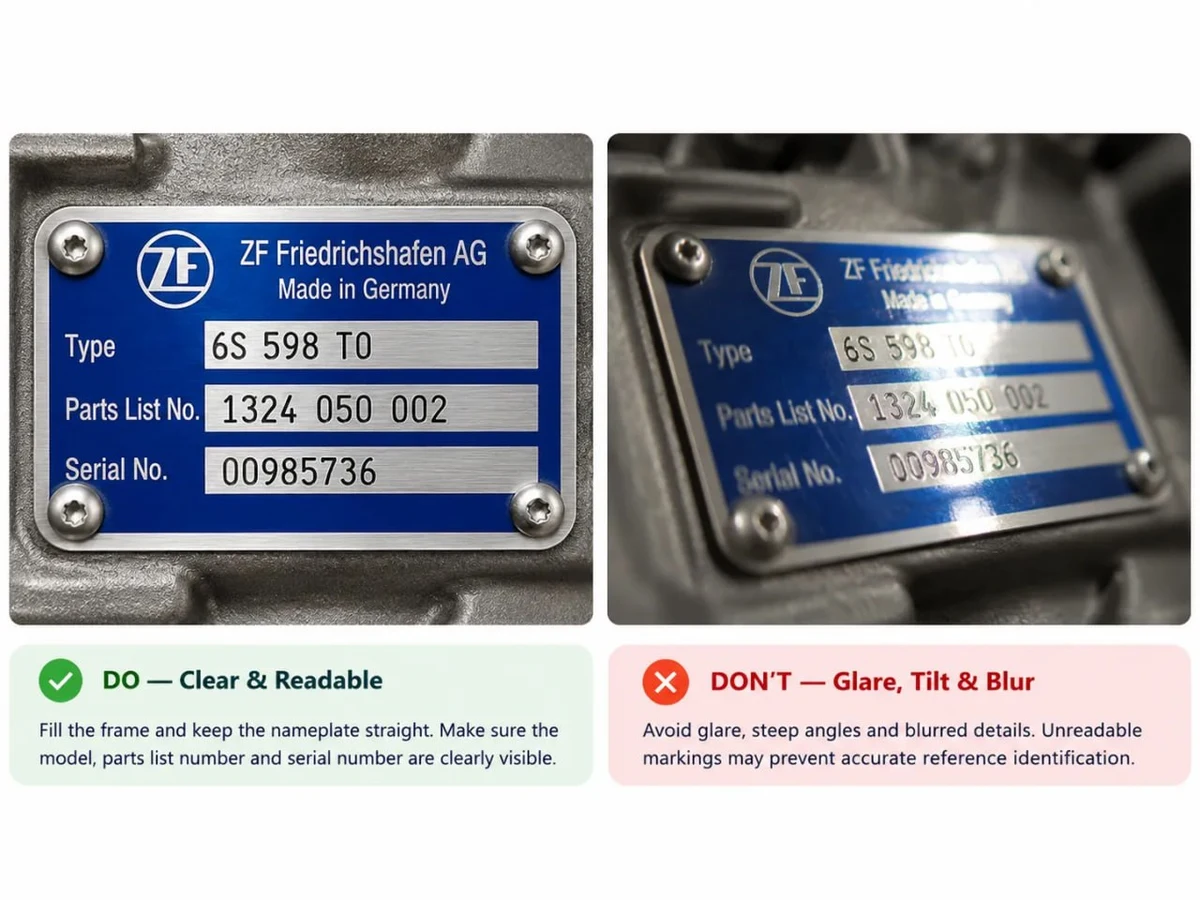
A useful record does not need a conclusion it cannot support. It needs the OEM reference, the proposed supplier reference, the variant and the evidence. If the evidence is a catalogue page, record the page; if it is a photo, record which feature it shows.
Leave the fitment field empty unless a separate fitment check has been completed. “Cross-reference exists” is not the same as “fitment verified”. That distinction protects both the buyer and the supplier when the part is later questioned.
- OEM reference and suffix.
- Supplier reference and catalogue source.
- Variant features compared.
- Evidence location: page, drawing, photo or sample.
- Open question and who will answer it.
When a supplier will not share the basis
A supplier may treat a cross-reference as commercial information and decline to share the catalogue source. That is a reason to narrow the claim, not a reason to accept it as OEM approval.
Ask for the variant comparison instead: which reference, which suffix, which coating or tooth count. If the supplier cannot answer at that level, keep the line as a candidate and do not present it as verified.
- Ask for the variant, not the whole catalogue.
- Record the supplier’s exact wording.
- Keep the fitment field open.
- Use the OEM reference as the anchor.
Bottom line
An OEM reference identifies a line; a supplier cross-reference is a claim about an equivalent. Keep the claim, the evidence and the open fitment question separate. That is what makes the mapping usable later, when someone asks why the part was chosen.
Need a reference checked? Send the assembly details, the stamped reference and photos of the old part. We confirm what the reference covers before quoting.