
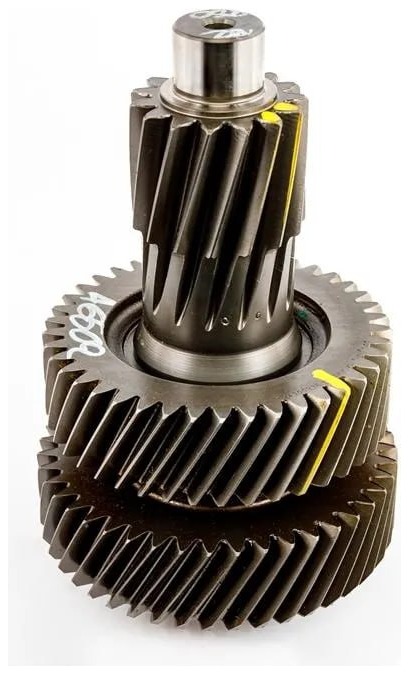
Short answer: an OEM reference identifies a specific catalogue line, not a whole transmission family. Two references can share a base number and still differ by suffix, coating, tooth count or completeness. The reliable sequence is assembly first, nameplate second, stamped component number third, and a reference check before any fitment or availability claim.
What an OEM reference can and cannot prove
An OEM reference is the manufacturer\’s identifier for a component or assembly. It is the right starting point for a sourcing inquiry because it narrows the search to a catalogue line. It does not, by itself, prove that a superseded number is interchangeable, that an aftermarket mapping is correct, or that the part fits a particular transmission build.
That distinction matters in B2B procurement. A buyer who treats every cross-reference as an approved interchange can order a part that fits the housing but not the build. A buyer who treats the reference as a lead — and verifies the variant — gets a quotation that can actually be checked.
| Identifier | What it usually proves | What it does not prove |
|---|---|---|
| OEM or catalogue reference | The manufacturer\’s identification for that line | That a superseded or alternate variant is interchangeable |
| Casting or foundry mark | The housing family or generation | The individual component reference |
| Aftermarket cross-reference | A supplier\’s mapping to its own range | OEM approval, fitment or equivalent quality |
| Nameplate model, serial and ratio | The assembly build | The part number or condition of an internal component |
The identification sequence that works
- Start with the assembly. Record the transmission model, the vehicle application and, where possible, the nameplate details. The assembly narrows the catalogue set before a single part is discussed.
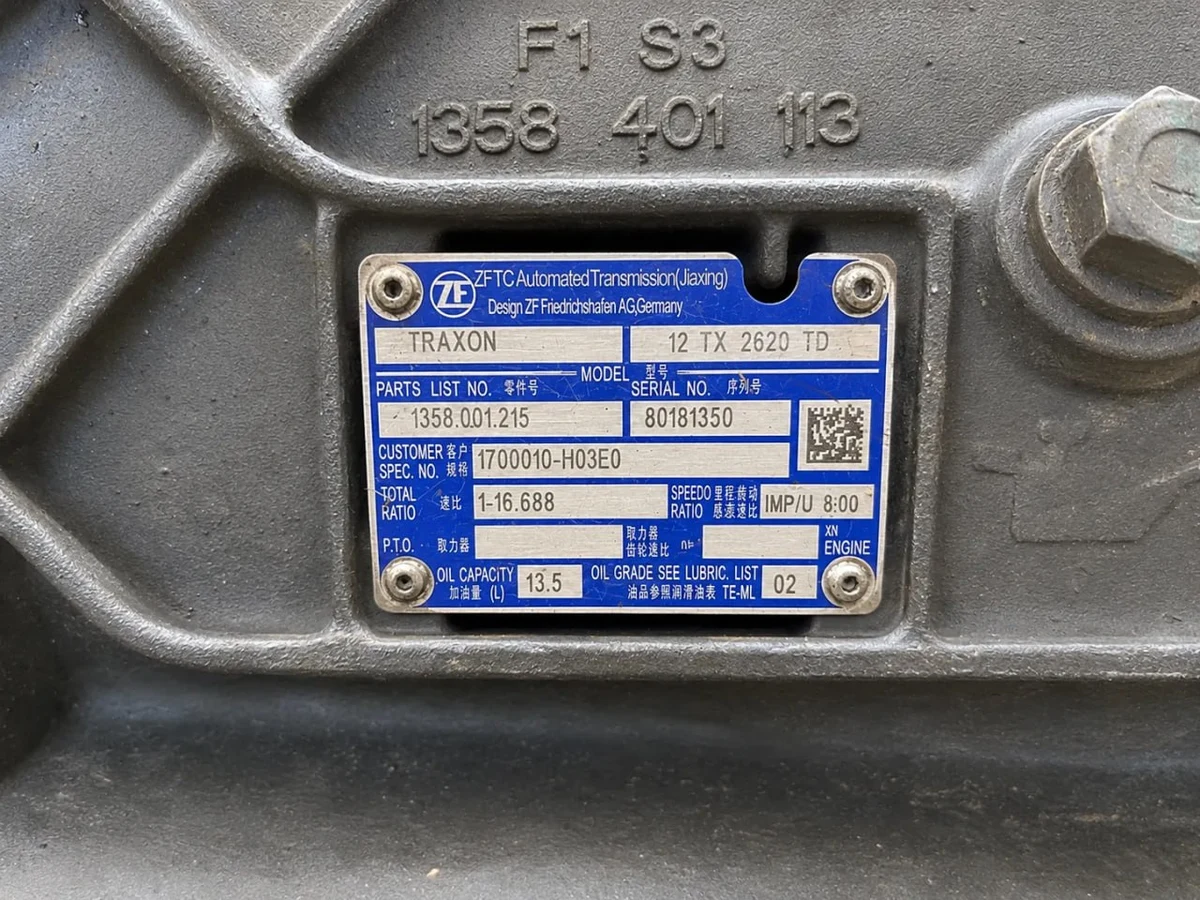
- Photograph the nameplate straight on. Fill the frame and send the original file, not a compressed chat image. The model, serial and ratio lines are often what separate two builds that look the same from outside. How to read a transmission nameplate covers the plate itself.
- Photograph the stamped component number. Put the number in focus and include a wider shot so the location on the part is clear. If the stamp is worn, photograph the old part from several angles rather than guessing the characters.
- Separate the base number from the suffix. A suffix can indicate a coating, a complete assembly, a tooth count or another variant. The base number alone is not enough for a quotation. Transmission part number suffixes explained lists the common markers.
- Confirm the variant against the old part. Check the friction face, tooth count, engagement features or dimensions that the reference is supposed to control. Do not use outside diameter alone where a tooth count or bore decides the part.
- Ask for a reference check, not a fitment guess. State the assembly, the reference and the variant. A supplier should tell you what the reference covers and what still needs confirmation before quoting.
Where reference checks usually fail
Most wrong-part problems are not caused by a missing number. They are caused by treating one identifier as if it proved more than it does.
- Supersessions. A newer number may replace an older one for a production reason that is not obvious from the catalogue line. The replacement still needs to be checked against the build.
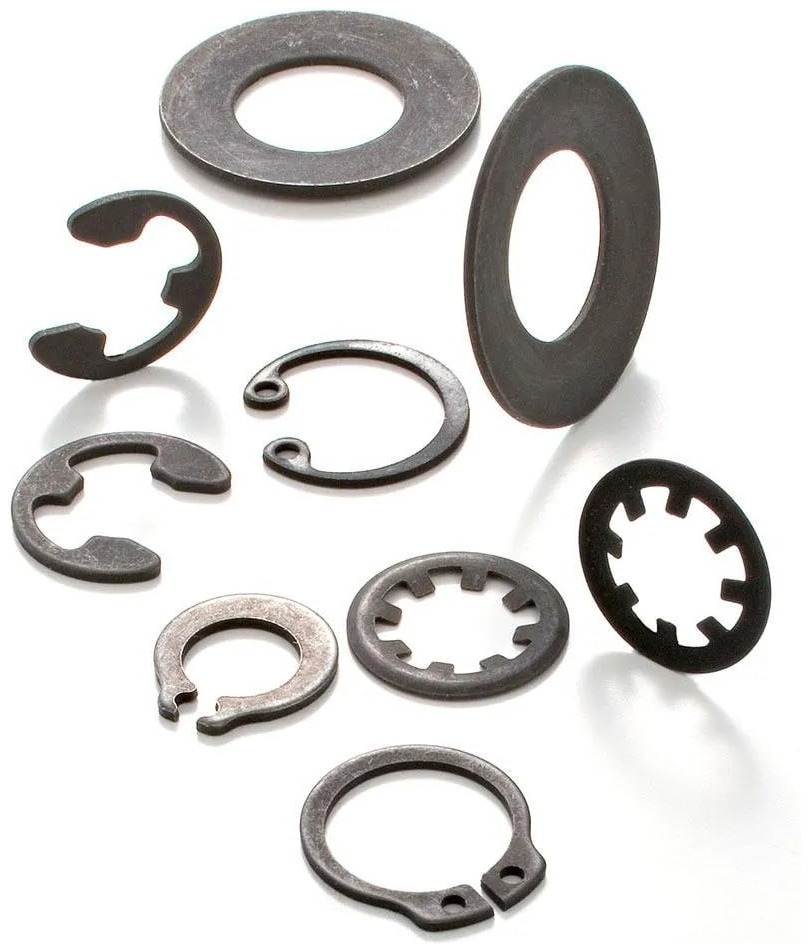
- Suffix variants. Plain and coated rings, bare and complete carriers, or different tooth counts can share a base number. The suffix changes the part.
- Packaging labels. A label on a box is evidence of what someone wrote on the box, not proof of what is inside. Photograph the part as well as the label.
- Mixed cores. A core box can contain parts from more than one build. Identify each component separately instead of assuming the box is one set.
What to send for a reliable sourcing check
- Nameplate photo, straight on and readable.
- Photo of the component with the stamped number in focus.
- One wider photo showing where the component sits on the assembly.
- The transmission model, vehicle application and any build or ratio information you have.
- Quantity, destination country and required documentation.
- If the unit is apart, a photo of the worn face with a scale in frame.
Do not send a list of guessed numbers. Send the evidence you have and mark the gaps. A clear “unknown” is easier to check than a confident guess.
How TransGearHub checks a reference
We use the assembly and nameplate to narrow the catalogue family, then match the reference against the catalogue line for that family. The brand pages are the entry points: Volvo, Eaton, ZF TraXon, Mercedes-Benz and Scania. The transmission directory groups the component families when you already know what you are looking for.
If the reference and the old part disagree, we say so before quoting. If the variant cannot be confirmed from the evidence, we mark it for review rather than converting a secondary reference into an OEM-authentic or fitment-verified claim.
Have a reference and a photo? Send the assembly details, the stamped number and the quantity. We will confirm what the reference covers before you commit to an order.
A reference-first habit for B2B buyers
The useful habit is simple: keep the assembly, the reference and the variant together in one enquiry. That lets a supplier answer a narrower question — “what does this reference cover?” — instead of a broad one — “what part do I need?” The narrower question produces a faster, more defensible quotation, and it leaves a written trail for the next order.