
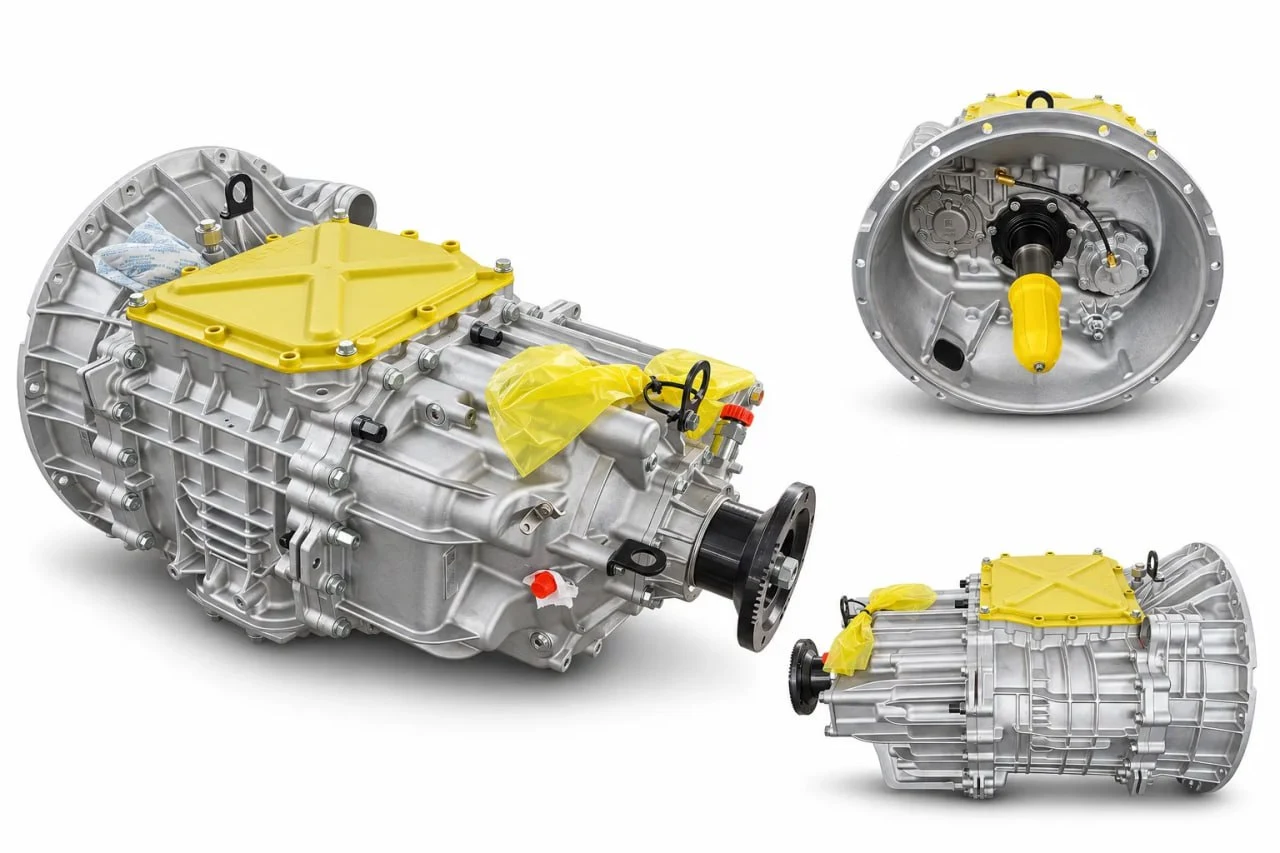
Start an Eaton parts inquiry with a readable transmission tag and a separate record of the component you need. Keep the full model designation, serial number and any additional identification field exactly as shown. Each number should stay attached to its original label and source.
Start with the tag on your transmission
Eaton’s transmission identification guide shows tag locations and provides separate nomenclature resources for manual and automated transmissions. Use the resource for the transmission being identified, rather than applying one code chart across every Eaton range.
Photograph the complete tag before transcribing it. Keep the image beside your typed record so another person can check a faint character, a space or a suffix. For general photo preparation, use our transmission nameplate guide.
Do not shorten a model to the part you recognise. If the tag has extra letters, punctuation or a second line, retain them in the record. Mark uncertain characters instead of silently correcting them.
Keep the identification fields separate
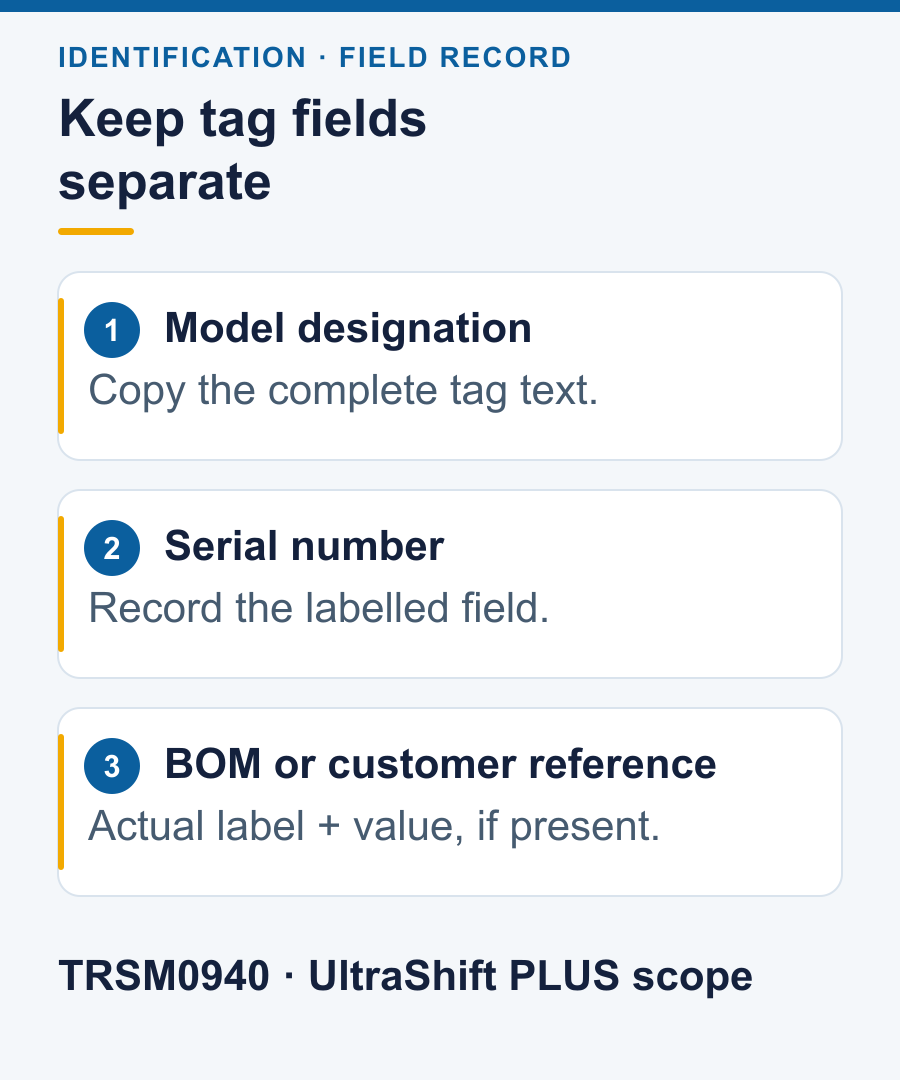
Eaton’s UltraShift PLUS manual, TRSM0940, distinguishes the model number from the serial number. Its identification chapter also describes a bill-of-material or customer number that may appear on the tag. That additional field is conditional, not a field to invent when it is absent.
| Field | What to record | How to keep it clear |
|---|---|---|
| Model designation | The complete model text on the tag | Keep letters, numbers and suffixes together |
| Serial number | The number beside the serial label | Record it separately from the model |
| BOM or customer number, where present | The additional reference and its actual label | Leave it “not visible” if it cannot be read |
This table is a recording aid. The source chapter concerns UltraShift PLUS; it does not establish an identical tag layout for every Eaton family. If your tag uses another field name, preserve that wording and the photograph.
Choose the matching nomenclature resource
Heavy-duty manual transmissions
Start with the heavy-duty manual section of Eaton’s identification guide. Keep the full designation available when consulting the relevant manufacturer documentation. A partial model copied from an old order is a lead to check against the installed unit.
If you are browsing the Eaton Fuller reference catalogue, keep the catalogue line and transmission tag as separate records. Browse results help describe an inquiry; they do not resolve a mismatch between those records.
Heavy-duty automated transmissions
Use the automated section and the documentation for the named range. Eaton publishes several automated nomenclature resources, so an automated transmission should not be identified from a manual-transmission chart alone.
For Endurant HD specifically, the TRSM0950 identification chapter locates the serial tag on the lower right side of the clutch housing. It identifies model and serial as information to have ready for parts or service assistance. Keep that location statement within its Endurant HD scope.
Record the component reference on its own line
After recording the transmission identity, describe the requested component. Copy any visible marking and state where it came from: the old part, a packaging label, a previous invoice or a catalogue entry.
A useful record says “number marked on old component” or “supplier reference from quotation.” It does not relabel every visible number as an Eaton part number. Keep the original photograph or document with each entry.
If an old order and the installed-unit tag disagree, send both records and explain the difference. Ask for clarification before accepting a proposed part. The transmission identity and requested component still need to be reviewed together before compatibility or availability is confirmed.
Leave unreadable fields unresolved
Write “not readable” when a character cannot be checked. Send the full-tag photograph and identify the uncertain field. Keep an unclear character visible in your notes rather than selecting a plausible number from a catalogue.
If the tag is missing, state that at the start of the inquiry. Include the transmission photographs and any existing records you have, clearly labelled by source. Ask what further identification is needed before a part can be assessed. Do not disassemble a unit simply to complete an inquiry form.
Send one Eaton identification record
Use a short identification block alongside the requested component:
- Transmission model: full text from the tag, or “not readable”.
- Serial number: copied from the labelled field.
- Additional tag reference: actual label and value, if present.
- Component requested: description, visible reference and reference source.
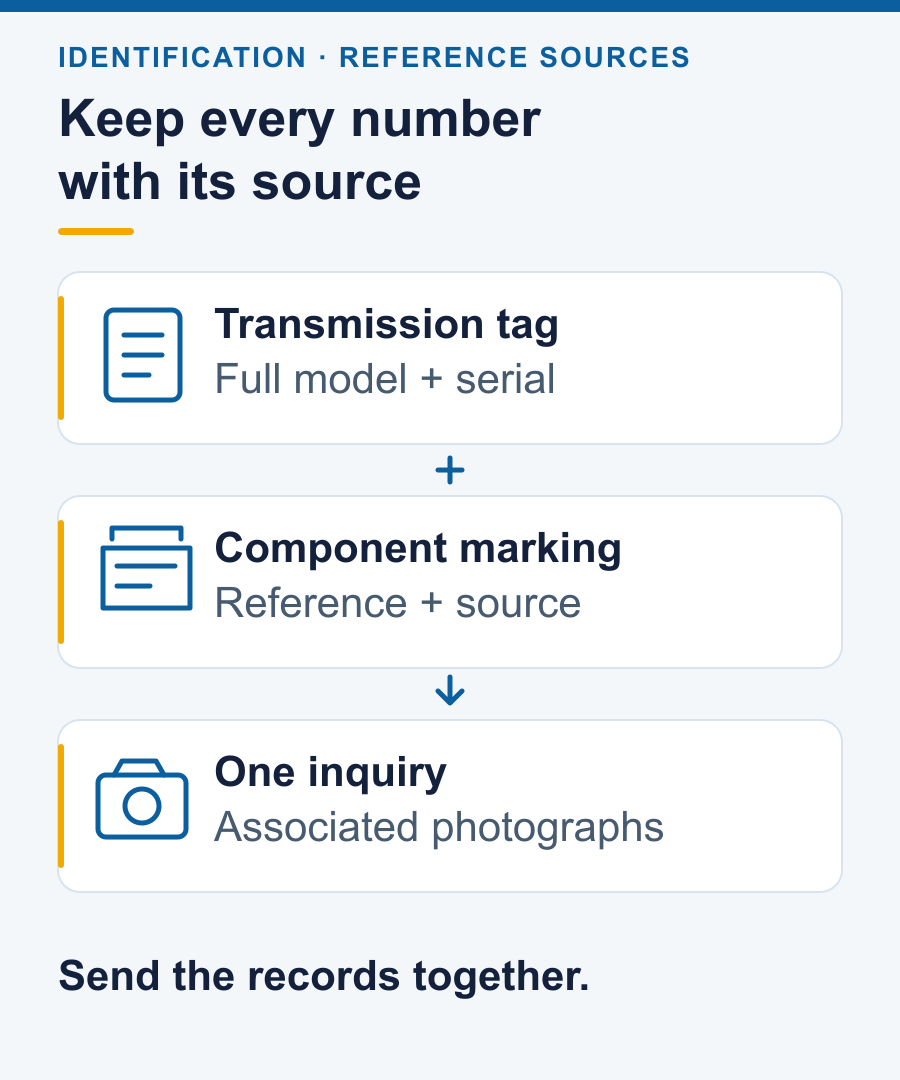
- Supporting files: full-tag image and relevant component photographs.
For quantities, destination and a multiple-line request, continue with the transmission parts RFQ checklist. Keep photographs associated with the same inquiry and line item.
Have Endurant reference details? You can browse the existing Endurant catalogue before submitting them. If identity is still uncertain, send the available evidence for review rather than choosing a catalogue match from appearance.
Ready to begin? Send the transmission and component details you have.